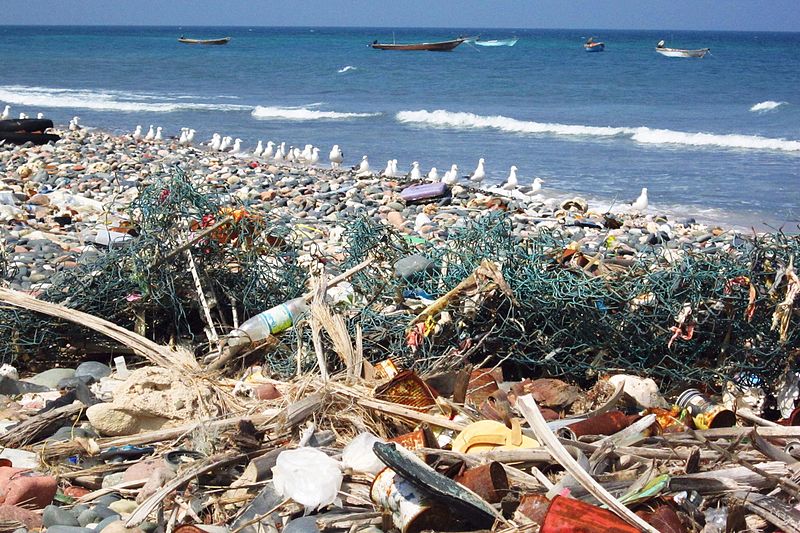
Often society considers their direct ecological footprint, forgetting to think about how one’s footprint includes the entire lifecycle – what happened before, during and after we consume items. Ultimately these items become waste or generate byproducts.
Waste touches every inch of our world – from our parks to our mountains to even the deepest parts of our oceans. As our global population increases, so does our waste footprint. This means more waste and contaminants are produced both visible and invisible.
Oftentimes wealthier, more developed countries generate more waste than less developed areas. This is due to a combination of their values, norms, and the extent they experience climate change. For example, the United States, a wealthy nation alone, comprises only 5% of the world’s population but produces 30% of the world’s waste. 22
The 3 Main Types of Waste
- Municipal Solid Waste: Everyday trash 4 20 36
- I.e. product packaging, grass clippings, furniture, clothing, bottles, food scraps, newspapers, appliances, paint, and batteries. 36
- Hazardous Waste: Waste with properties that are dangerous for human health or the environment. 40
- I.e. Medical & chemical waste
- Solvent-based paints
- Pesticides and other garden chemicals
- Batteries (car, mobile phone, household batteries)
- Motor oils (for example from cars or mowers)
- Petrol and kerosene.
- Cleaning and polishing chemicals.
- Swimming pool or spa bath chemicals.
- I.e. Medical & chemical waste
- Non-hazardous waste: Generated by the process of creating goods.
- I.e. power generation, manufacturing waste like pulp, paper, iron, steel, glass, concrete and more 10
Waste can also be characterized by the 3 main sources: 10
- Municipal: This waste is derived by homes.
- Industrial: This all-encompassing term is used to waste derived from the manufacturing process derived from industry or factories.
- This can be hazardous or non-hazardous waste.
- Ex. Factories, manufacturing facilities, power plants, refineries, and more
- Commercial: Refers to waste generated from for-profit businesses.
- Ex. Offices, restaurants, hotels, stores, gyms, and hospitals
All waste must be managed properly and responsibly to have minimal impact on human and environmental systems.
How is Waste Managed?

Once generated, waste must be managed through one of the following methods: Reuse, recycling, storage, treatment, energy recovery, and/or disposal. Below are the key waste management methods: 20
Non-Hazardous Waste Treatment
Direct to Landfill
- Areas where large amounts of municipal solid waste is disposed of.
- Associated Problems:
- The release of toxins, leachate, and greenhouse gasses due to the slow waste degradation process.
- Leads to negative health impacts for local human, land animals and marine populations.
- Alters air quality.
- & more 38
Waste Incineration 6
- The burning of hazardous materials at high temperatures to destroy contaminants.
- Waste to Energy: Involves the same process. Once the waste is burned heat is captured in a boiler and a generator to produce electricity. 42
- Note, incineration does not destroy metal like lead and chromium.
- Associated Problems:
- Releases greenhouse gasses and chemical air pollutantsPollutes water and food supply close facilities.Health defects for all organisms who breathe, drink, and eat associated contaminants
- Increases likelihood of having birth defects, developing cancers, and more.
Recycling 1 11 31 41
- Non-contaminated waste such as plastic, glass, aluminum and other metals are able to be used, collected, processed and remanufactured into a new product. This gives the item a new life.
- Recyclability differs on the item’s material color, and the capacities of the local recycler.
- Items Recyclability:
- Plastic can only be recycled once or twice because the quality will decrease during processing.
- Glass and aluminum can be recycled almost infinitely.
- Paper can be recycled five to seven times.
- Recycling saves energy as it offsets energy used in the extraction and refining of raw materials.
- Associated Problems:
- Effectiveness is unclear due to lack of education and/ or confusion when it comes to recycling knowledge.
- Doesn’t get down to the root of the problem and supports a culture of consumerism and disposability.
- Generally, recyclability is dependent on market demand, which is quite low. 14
Composting 7 39
- The process of converting organic materials into a nutrient-rich soil or mulch through natural decomposition.
- This can be done on the large scale or at home.
- Industrial Composting: Uses the same biological processes as home composting but scales the process and requires machinery.
- This has enabled bioplastics to thrive. Note: Industrial composters can only compost bioplastics if the item goes to a facility with this capability, otherwise these products go to the landfill. Industrial compostable plastic materials can be an example of greenwashing in this instance, regardless of the decision’s intention.
- Associated Problems:
- It is inaccessible for many residents to compost at home.
- There is a lengthy treatment period.
- Creates odor and other byproducts.
- As a business owner or operations manager, it is difficult to guarantee bioplastics will be recycled.
- It is inaccessible for many residents to compost at home.
NOTE: All the waste treatment methods lead to pollution, GHG emissions and subsequent global warming.
Hazardous Waste Treatment
Treatment methods are as follows:
- Chemical treatment: neutralization, precipitation, ion exchange, reduction, or oxidation
- Thermal treatment – incineration
- Biological treatment – The use of microorganisms to break down items to be stable.
- Physical treatment – solidification, flotation, sedimentation, evaporation, or filtration
Unfortunately hazardous waste contaminants, such as toxic chemicals, oils and debris, have harmed human and environmental ecosystems; View specific instances from the National Oceanic and Atmospheric Association. There has been national legislation put in place to decrease the possibility of these occurrences. View the US EPA’s website for more information 40
Miami’s Specific Challenges
Microplastics & the Ocean
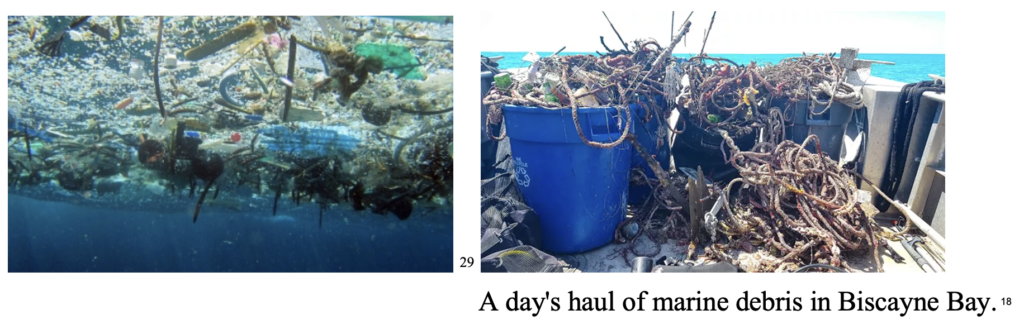
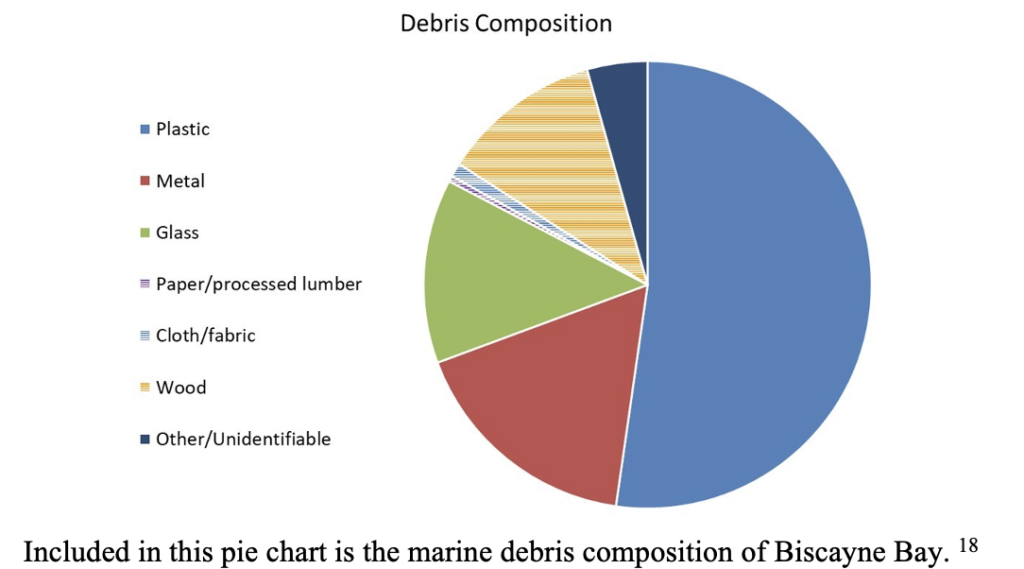
All liquid, gaseous and solid waste generated by coastal areas, like Miami-Dade County, are at risk of entering our oceans. Plastic waste is a preventable issue that is a major hazard for animals and human animals despite their size. Due to plastics being disposable and convenient it is found almost everywhere – in our homes as water bottles, cutting boards and spatulas and natural spaces as benches, structures, kayaks, marine animals and more.
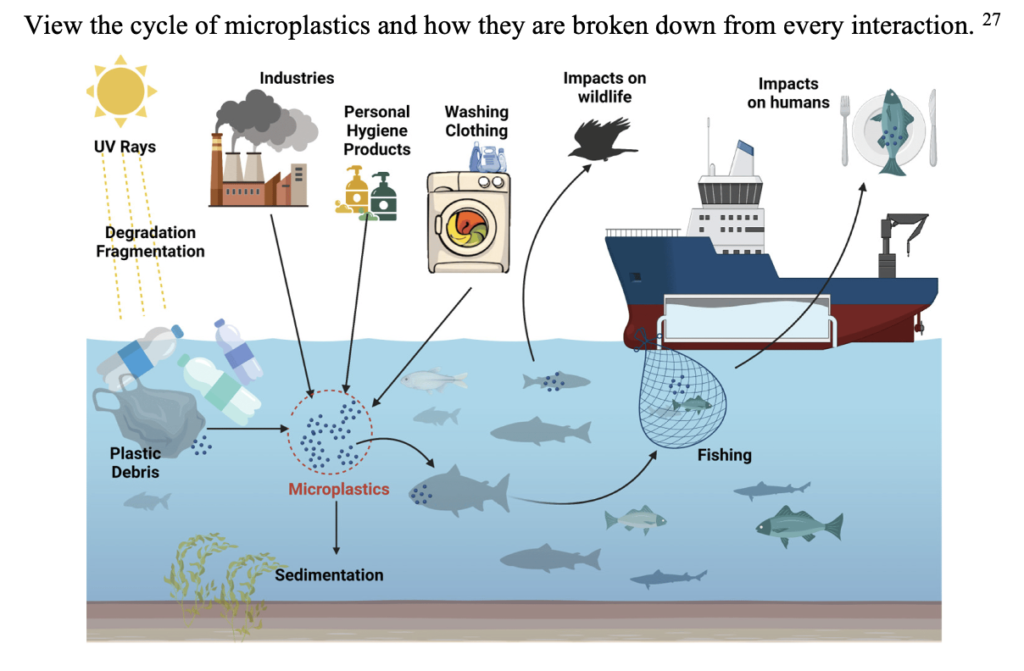
Plastics and the microscopic microplastics they shed, pose irreversible large-scale impacts to humans and environmental systems:
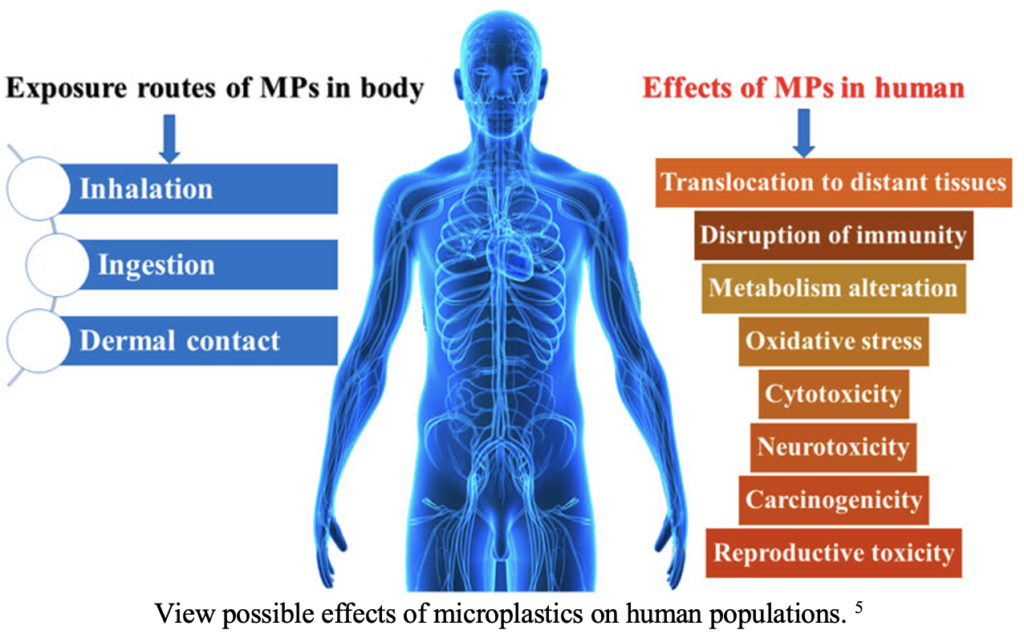
Microplastics enter the human body in two main ways: Utilizing items derived from plastic and consuming contaminated food such as fish and shellfish. View some ways microplastics impact human health:
- A 2022 study conducted by a team of researchers in Italy discovered that tiny plastic particles, less than five millimeters, were found in 75% of 34 breast milk samples. 27
- Other 2022 studies found evidence of microplastics in placentas, heart tissue and blood.
- These findings pose danger to humans, particularly babies and young children. The chemicals that comprise microplastics act as endocrine disruptors that mimic and/or interfere with human hormones. 17 27
- Hormones impact everything from sleep to hunger to sex and the presence of these chemicals can create a variety of issues such as…
- Improper fetal development
- Neurological disorders
- Altered moods
- Disruptions in fat storage, ultimately leading to obesity.
- Insulin resistance
- Cancer
- & More 15
- Hormones impact everything from sleep to hunger to sex and the presence of these chemicals can create a variety of issues such as…
- These findings pose danger to humans, particularly babies and young children. The chemicals that comprise microplastics act as endocrine disruptors that mimic and/or interfere with human hormones. 17 27
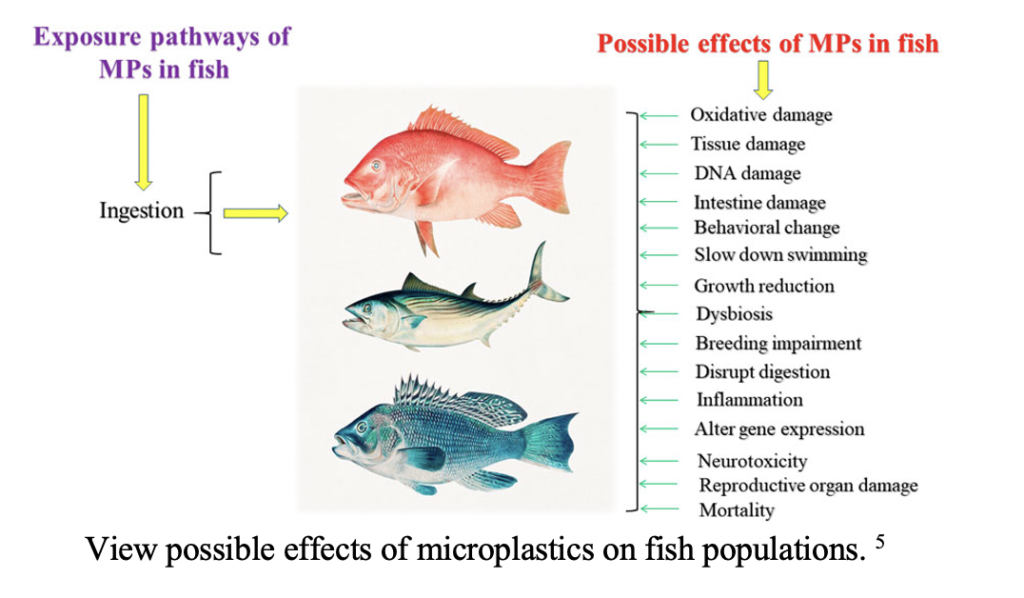
Microplastics pose great threats to animal populations as well, which has been documented in Miami’s water and all around the world. Animals digest microplastics in two ways, by consuming ocean plastics and living and breathing in water contaminated with microplastic particles derived from the years of ocean breakdown. These plastics impact….
- A variety of organisms that live in or associated waters of South Florida
- Specific species like osprey, fishes, jellyfish, oysters, mud crabs, sand dollars, sea cucumbers, and deep-sea fish have been studied in Florida regarding their microplastic content.
- Impacts include of microplastics include:
- The accumulation of microplastics in the gastrointestinal tracts leads to false satiation, reduced feeding, and weight loss.
- Consumption causes inflammation, reproductive issues, and hormone imbalances.
- Unhealthy fish lead to smaller and less nutritious fish → this poses economic struggles for fishermen and degrades human health. 5
- Impacts include of microplastics include:
- Specific species like osprey, fishes, jellyfish, oysters, mud crabs, sand dollars, sea cucumbers, and deep-sea fish have been studied in Florida regarding their microplastic content.
Tourism & Plastic Pollution
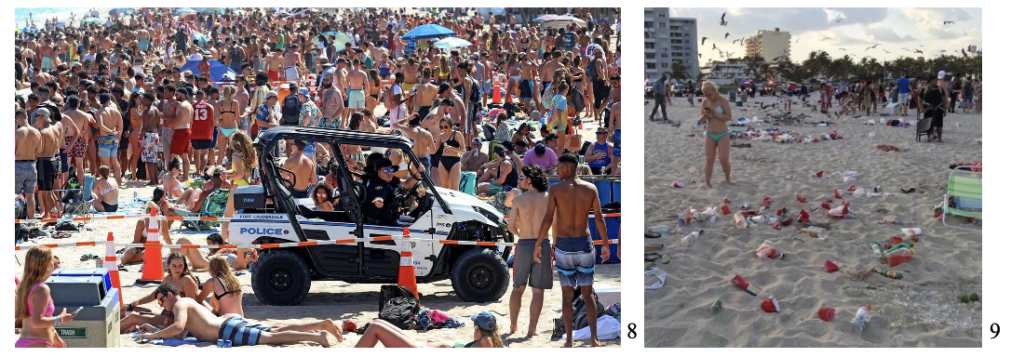
The tourism industry is key to Miami; however, it has a complicated relationship with the environment of Southern Florida. Miami’s vibrant beaches, bustling nightlife, and countless attractions, make Miami irresistible for young travelers seeking sun, fun, and unforgettable experiences. Travel numbers have experienced positive continuous growth; According to the US Transportation Security Administration (TSA), the travel volume spiked 6% in 2024 compared to the same time in 2023. 23 While the industry generates significant benefits to the area by supporting the local economy, tourism has had negative impacts on natural environments.
Below I have outlined key consequences of tourism:
- Strained local natural resources particularly water, energy, and food.
- Mistreated and damaged sensitive ecosystems
- The Everglades and the coral reefs of Miami-Dade attract tourists.
- Constant recreational activities and development disrupts delicate ecosystems and contributes to loss of biodiversity and its associated impacts.
- Large tourist populations mean ungodly amounts of waste.
Each year, Miami-Dade County experiences over 11 million metric tons of plastic on their beaches, in the sea and in their bays. 25
Beyond Year-round tourism, Miami attracts a specific population during spring break – so-called “Spring Breakers.” These are typically college students and young adults who vacation along Miami’s beaches. They are known for their bar hopping and ironically crowded beach parties. They produce a disgusting amount of waste and trash that they leave scattered across the beaches.
You can find any item you can think of all disposable – vapes, bottles, flip flops and even clothing items. They add countless items to the city’s waste stream such as plastic bottles, food containers, single-use utensils and more.
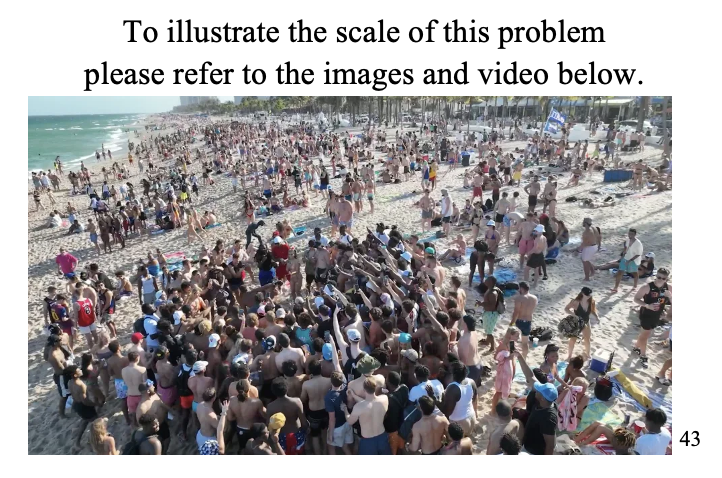
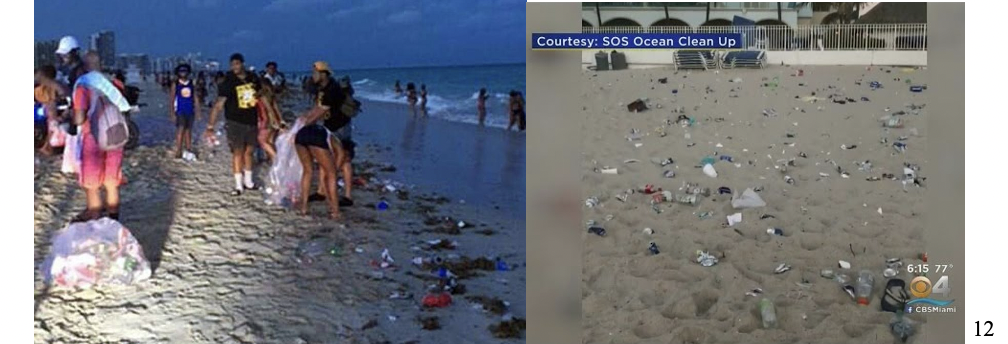
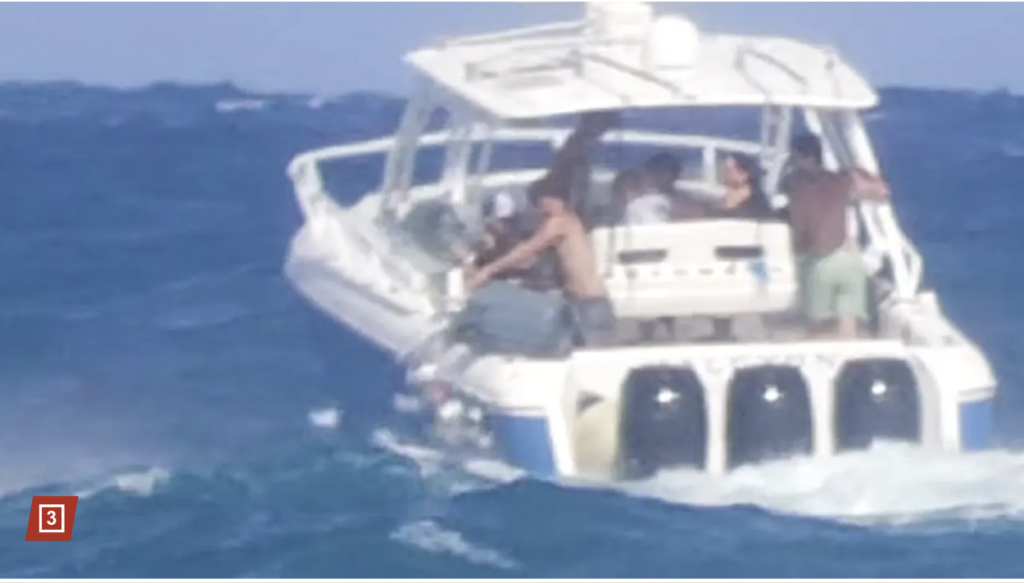
In 2024, view “boozed-up spring breakers” dumping overfilled trash cans into the ocean. 3 13
Garbage as a Social Justice Issue
Landfills are the most popular way to manage waste. Miami has two landfills, North Dade and South Dade Landfills, that serve the estimated over 2,000,000 people living within the city (2023). 16
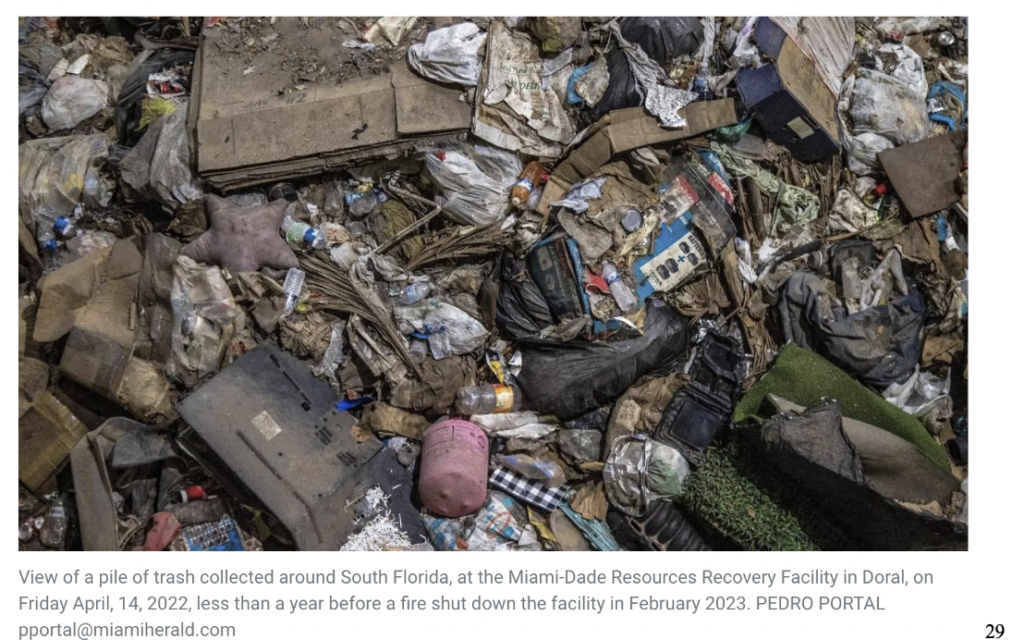
The global waste crisis intersects with social justice issues as it exacerbates inequalities and disproportionately impacts marginalized communities. Historically, landfills are placed in areas with high populations of those who identify as black, indigenous, and people of color (BIPOC). Oftentimes, the waste is transported into vulnerable areas that experience challenges like food insecurity and lack of access to healthcare which already decrease the quality of life. As a result, those living and working close to these waste facilities develop health issues including but not limited to, respiratory problems, cancer, developmental disorders and more. This results in further burdens on already vulnerable communities. Communities in Miami are not exempt from this reality.
Both landfill locations are areas that have prominent negative effects of issues such as gentrification, food deserts and more. The location of landfills can exacerbate many factors. A notable one is how placement of landfills intensifies economic disparities. This is because…
- Close proximity to landfills leads to chronic and sometimes debilitating health issues, as indicated above. This inhibits workers to function at their best capacity making it more difficult to leave the area and line of work.
- Oftentimes, inadequate access to essential benefits like health care and education hinders people’s ability to sustain themselves physically and monetarily.
- If employed by waste management facilities, locals often have low wages, poor working conditions, and a lack of job security. This is exploitative and disables people from leaving the poor treatment.
It is unfair that communities with preexisting struggles must absorb the monetary cost and physical price of societies’ decisions. 30
Relevant Stakeholders
- Government Entities:
- Miami-Dade County Department of Solid Waste Management
- The City of Miami Department of Solid Waste
- National agencies as well
- Miami-Dade Police Department
- City of Miami Police Department
- Environmental Organizations: Groups advocating for sustainable waste management practices and environmental protection.
- Surfrider Foundation Miami Chapter
- The Environmental Coalition of Miami & the Beaches
- Waste Management Companies: Private waste management companies who collect, transport, recycle, and dispose of waste.
- Waste Management Inc.
- Other Recycling Facilities
- Miami Residents
- Businesses and industries producing waste
- Tourists and Spring Breakers
- Health and Safety Regulators: Agencies responsible for ensuring compliance with health and safety regulations related to waste handling and disposal.
- Educational Institutions such as early childhood schools who provide education on recycling and sustainability to community members.
- Universities that may conduct research on waste management techniques and impacts.
- News Outlets
Miami’s Current Solutions & Further Solutions
Waste and Tourism
To prevent and counteract the chaos specifically created by Miami Beach Spring Breakers, the City of Miami imposed strict measures that included a curfew for partiers and police along the beach during the day to oversee the festivities. 23 33 While it decreased some economic gains for local business, these tightening regulations had an impact on visitors’ intentionality when being at the beach. The new policies have been in question however they did succeed in holding spring breakers more responsible after three consecutive years of violence that included two fatal shootings last year. 23
Microplastic Contamination
Concerns about the impact of chemicals on humans and environmental systems has led some chemical manufacturers to voluntarily stop their production, such as polybrominated diphenyl ethers (PBDEs). 17 Moreover, to protect the ecological integrity of areas, some states and several European countries have banned some chemical combinations. 21 More recently, in the year 2024, more and more states are banning “forever chemicals,” such as Polyfluorinated Substances (PFAS). At least 35 states are introducing policies in 2024 as trailblazers advocating for healthier products for both humans and animals. Florida at this point has not implemented any legislation that targets chemicals within plastics. 37 26
Miami-Dade specifically offers the Plastic Free 305 badge to local businesses dedicated to reducing or eliminating their purchasing and use of single-use plastics. This work continues existing local environmental stewardship projects like Plastic Free Miami Beach, and Greener Coral Way. Each of these certifications showcases businesses that have reduced plastic consumption at their establishments. The effectiveness of these programs seems to be minimal but act as a motivator for people to be better for the environment and drive business growth. Based on the certification, it is possible that many of these businesses are using “band-aid solutions” and not getting down to the root of the problem. These programs are effective when they lean into reuse systems. 16
Florida is not progressive in terms of environmental policy. The state and businesses within it often leverage “greenwashing” to trick or mislead consumers and visitors that untrue sustainable action has taken place to attract customers. Since Florida is a climate denying state, there is often legislation that disincentivizes positive environmental action. For example, the state of Florida has made it illegal for any local jurisdiction to ban plastic or polystyrene, even though more than a hundred local governments throughout the country done so. Regardless of the proven negative issues linked to plastic pollution, the state government of Florida does not prioritize creating positive environmental change. 19 24
Dealing with Waste Management: Recycling
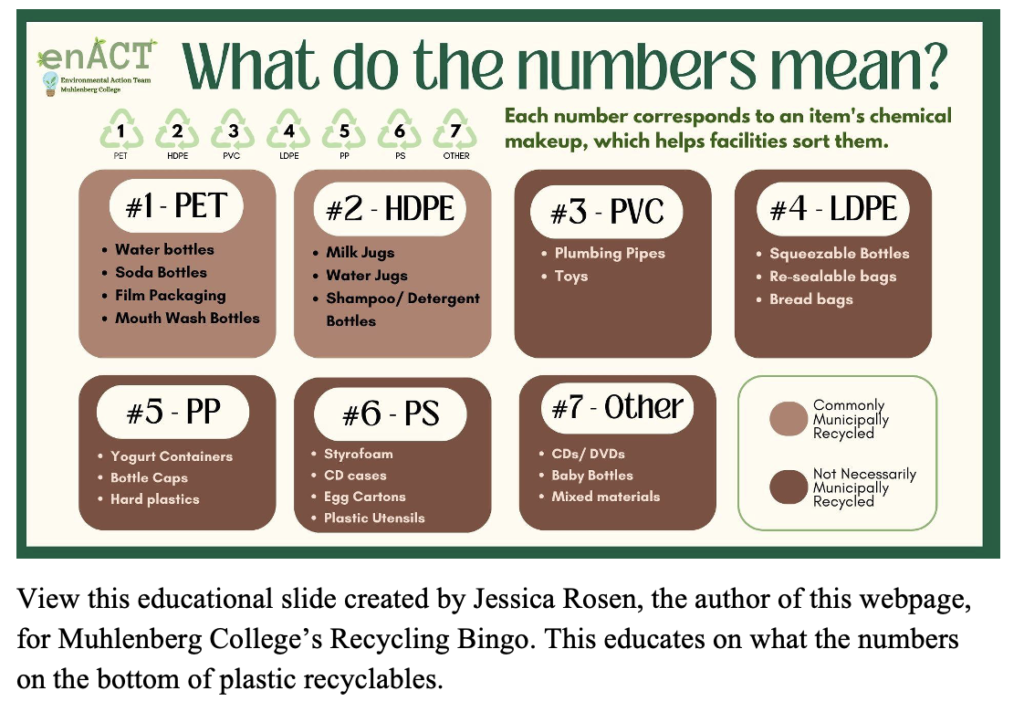
Recycling is one of the most ambiguous parts of waste management, yet it the most important waste management solutions in consumers and companies’ eyes. While recycling has a potential to have immense impacts in offsetting GHG emissions, it also acts a way for people to feel good about throwing waste in a bin. Recycling is only effective if done correctly, in accordance with the local facility.
What is one key way to ensure recycling is done properly?
Education
Education is pivotal to understanding and promoting the recyclability of products. Raising awareness and understanding among individuals about its importance, intentionality and the realities will lead to a more effective waste management system. Through learning the benefits and downfalls of recycling, society can play a bigger part in keeping our personal and global environments clean and unharmed. Once citizens are familiar with proper sorting techniques and recycling practices for their region, they will be empowered to actively participate in spreading recycling knowledge in and out of their communities.
Switching to a Reuse System
The phrase “reduce, reuse and recycle” is often used to summarize waste management strategies. Note the specifically ordered words of the phrase. The order communicates the preferences for how to deal with waste.
- “Reduce” is the most favorable approach. This suggests that you consider the product and brands you are buying. When purchasing, ask yourself, is the quality good? Why? Why not?
- This method enables the consumer to have a voice and impact by making a choice to vote with their money. Note: Sustainable brands are often more expensive which is an accessibility issue.
- “Reuse” is next. Ideally, consumers should be purchasing items that can be more commercially reused and THEN recycled (after many times reusing), like glass and aluminum. Moreover, individuals can support local businesses that have a reusable packaging system.
- There are countless ways to reuse all items such as paper, glass, aluminum, wood, and even plastic!! It is encouraged to get creative with reuse ideas to extend products’ lifecycles.
- “Recycling” is the least ideal method to manage waste. It pushes the responsibility off of the company, onto the individual and eventually their respective waste management facility.
- Oftentimes waste management facilities are not able to extend the material’s life cycles by configuring the molecules into something new. This also does not fix the root of the problem – the consumption. This is why reducing is the most effective solution.
Conclusions
Overall, Miami-Dade County’s solutions regarding waste management are not sustainable under our definition of sustainability. It was quite difficult to find solutions and once solutions were found they were deemed quite unsuccessful in creating environmental value along with social and business value. The governmental policies created support the economic values of the county regardless of potential meaningful added community value. With the acknowledgment that the garbage crisis is one of the biggest issues that plagues our world, Miami-Dade County could still be working harder to support the health of human and natural systems, preserve biodiversity and reduce their negative impact on the local community, as aligned with our definition of sustainability.
Limitations & Barriers to Solutions
Financial
- Lack of adequate rec[1] ycling infrastructure and waste management resources
- Limited funding and resources are allocated to address microplastic ocean pollution.
- Miami-Dade must absorb the waste generated by tourists which tests the capacity of their existing systems.
- Wealthy people often support the wealthy areas – These people do not absorb the impacts of their actions and waste.
Social
- Enacting large scale change would require inconveniences for many as cultural norms that prioritize convenience over sustainability make intentional solutions harder to implement.
- There is a lack of awareness and education about plastic pollution and its subsequent issues on both human and environmental areas.
- In many areas of the city there is limited community engagement and participation
- Socioeconomic disparities affect access to resources such as education and support to be a part of solutions.
Political
- Lack of political will to enact and enforce regulations on waste disposal, plastic use and purchasing.
- Comprehensive waste management policies addressing social justice concerns such as equitable access waste collection services, healthcare, education, and jobs are not existent.
- A challenge of coordinating multilateral efforts among political entities and stakeholders to implement effective solutions that go beyond greenwashing.
Broad List of Assets
- Debris Free Oceans
- Clean Beach Miami
- Solid Waste Management department
- Miami Waste Paper Co
- Waste Connections of Miami Florida
- Miami Waterkeepers
- Ocean Conversancy
- The Miami University Shark Research and Conservation Center
- Plastic Free Miami Beach
- Zero Waste Miami
- & more